Using Forklift Telematics to Enhance Operator Performance
In one manner of speaking, forklift safety can be distilled down to three core elements: the right equipment for the job operated by the right operators in the right environments. Of these three variables, only the human operator can exercise judgement and embody accountability as they run through the day’s work, making them both the strongest and weakest link in the chain. As such, forklift safety is entirely reliant on human operators to make sound choices regarding the equipment and environments they operate around – which is where forklift telematics systems come in.
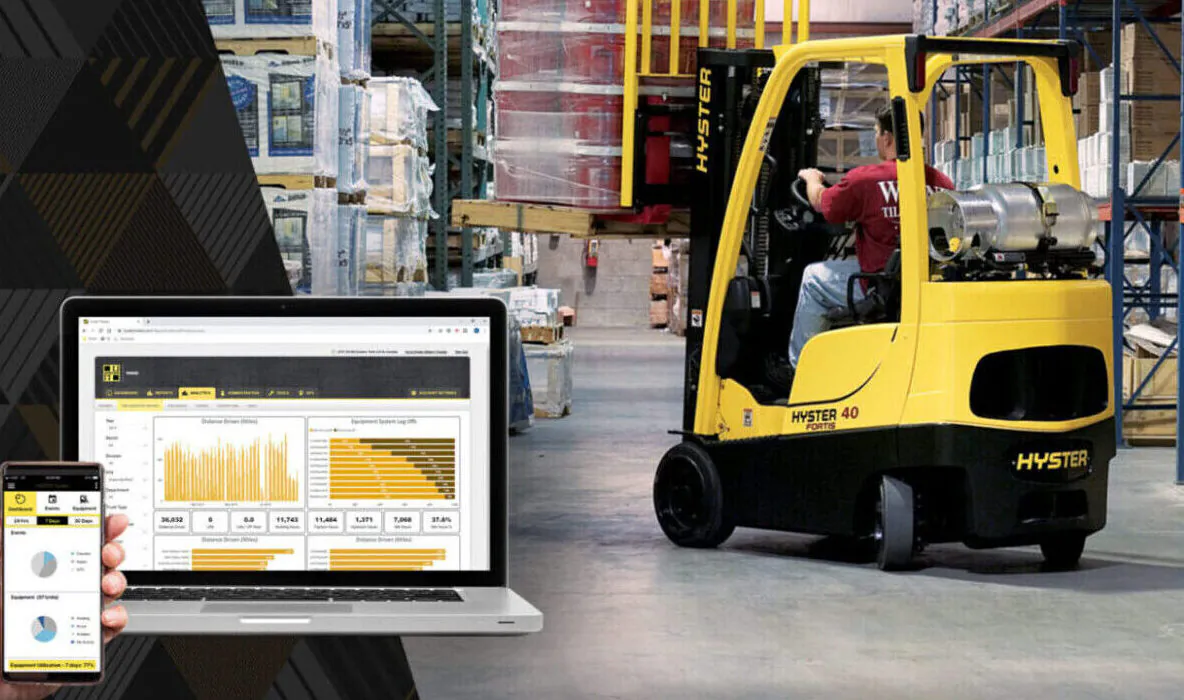
Forklift telematics are technology systems integrated into forklifts that provide a wide array of benefits to both forklift operators and fleet managers. At their core, telematics platforms connect a forklift with a separate data system that collects, analyzes, and optimizes operational factors involving that lift. Most of this optimization comes from proactive interaction with the lift’s operator, with additional benefits of coordinating lifts and missions across the whole fleet in real time. By connecting each operator with data about their performance and behavior, managers can substantially improve how they communicate with and drive safety ownership through their team.
Safety-First Features of Forklift Telematics Systems
Next up, let’s review how forklift telematics systems work, and how supply chain and logistics organizations use telematics to foster operator safety and accountability:
- Real-Time Monitoring – telematics systems add monitoring sensors to a forklift that track its position, performance, speed, and operating state in real time. These systems connect to wireless networks within a warehouse, through which monitoring data is reported to central servers for further analysis. By capturing this data, telematics systems help managers detect and resolve unsafe behavior, looming mechanical problems, and operational inefficiencies as they occur within the fleet.
- Operator Behavior Reinforcement – telematic systems include an operator interface that interacts with the operator as they go about their day. Through this interface, the system enforces pre-shift checklists, operator badge-in, energy conservation via inactivity shutdown, and proper collision resolution by locking out the lift after an impact.
- Data Collection & Analysis – collected data is used to build a complete picture of each operator and lift in the fleet, establishing performance and utilization baselines that can feed into managerial decisions. Most often, this data is used to analyze routes through breadcrumb GPS tracking, critical impact events, and equipment health via diagnostics tracking.
- Active Communication – ideally, forklifts should stay in use completing missions consistently throughout a shift, which makes it vital that operations leaders know when a lift experiences a time-draining issue. Telematics systems include proactive monitoring capabilities that send notifications by text message and email to managers about collisions, lift status changes, operator access denials, and maintenance triggers.
- Robust Recordkeeping – telematics systems collect and store data in safe, reliable central database servers, which can be accessed from anywhere through a mobile app or web portal. These secure records provide fleet managers with ample documentation to support employee performance reviews, safety issue debriefs, retraining, and incident investigations.
- Total Warehouse Optimization – using telematics data collected over time, fleet managers can develop very robust operational models of their warehouse and forklift fleets. In this way, telematics fits perfectly into the much wider goal of total warehouse optimization by providing deep insight into asset reliability, safety compliance, training completion, and operator engagement.
As we can see, telematics systems urge operators to act safely and make sound decisions in multiple ways. All in all, these features lead to serious operator accountability, as hard data collection and persistent behavioral reinforcement all throughout a workday do not leave room for misinterpretation or argument.
How Telematics Reinforce the Tenets of ITA’s National Forklift Safety Day
Every year, the Industrial Truck Association (ITA) hosts their annual National Forklift Safety Day – an event dedicated to raising awareness around the necessity of world-class forklift safety and operator training. This year’s event will occur on June 9th, 2026, open to attendees both in person in Washington, DC and online.
One of the many virtues of the ITA is their continued contribution to technical standards that govern the forklift and wider material handling industry (such as published through ANSI, ASME, NFPA, and similar organizations). Across these standards, the ITA anchors itself to a few core tenets: enhancing forklift operator safety, protecting pedestrians exposed to forklifts, and providing forklift operators with continuous training.
Interestingly, telematics systems directly reinforce these tenants in the following ways:
- The Responsibility of Safety – beyond all the standard forklift safety tools and practices, National Forklift Safety Day stresses that every operator, supervisor, manager, and corporate leader adopts the responsibility of ensuring that everyone goes home safely each day. Telematics systems provide data and insights used to improve the decisions and actions that feed into these responsibilities.
- Learning-Focused Safety Culture – National Forklift Safety Day recognizes that errors are not surprises or mysteries, but instead natural occurrences that can’t be improved unless people and processes are oriented to extinguish them. Telematics systems are useful to this end, supporting a learning-focused safety culture where all employees commit to find, analyze, and extinguish errors before they ever lead to safety risks.
- Technology as a Tool – a robust hierarchy of hazard controls includes elimination, substitution, engineering controls, administrative controls, and personnel protective equipment practices to properly manage safety risks in a warehouse. Telematics is best considered to be one tool in this larger toolkit of hazard controls that organizations should use to build a company-wide foundation of safety.
We hope that this discussion has been helpful for your commercial material handling and operational needs. Fairchild Equipment is the Upper Midwest’s premier Material Handling Equipment and Service resource, with headquarters in Green Bay, Wisconsin, and numerous locations ready 24/7 to serve your needs throughout Wisconsin, Minnesota, North Dakota, Michigan’s Upper Peninsula and Northern Illinois. For more information or to discuss which equipment solution might be best for you, please call us at (844) 432-4724 or send us a message.