On a recent site visit, a customer asked for our opinion on two statements: that warehouse automation is mainly reserved for large-scale operations only, and is nearly impossible to pencil out at small scales. Our response? While these thoughts were true at one time, they’re not anymore.
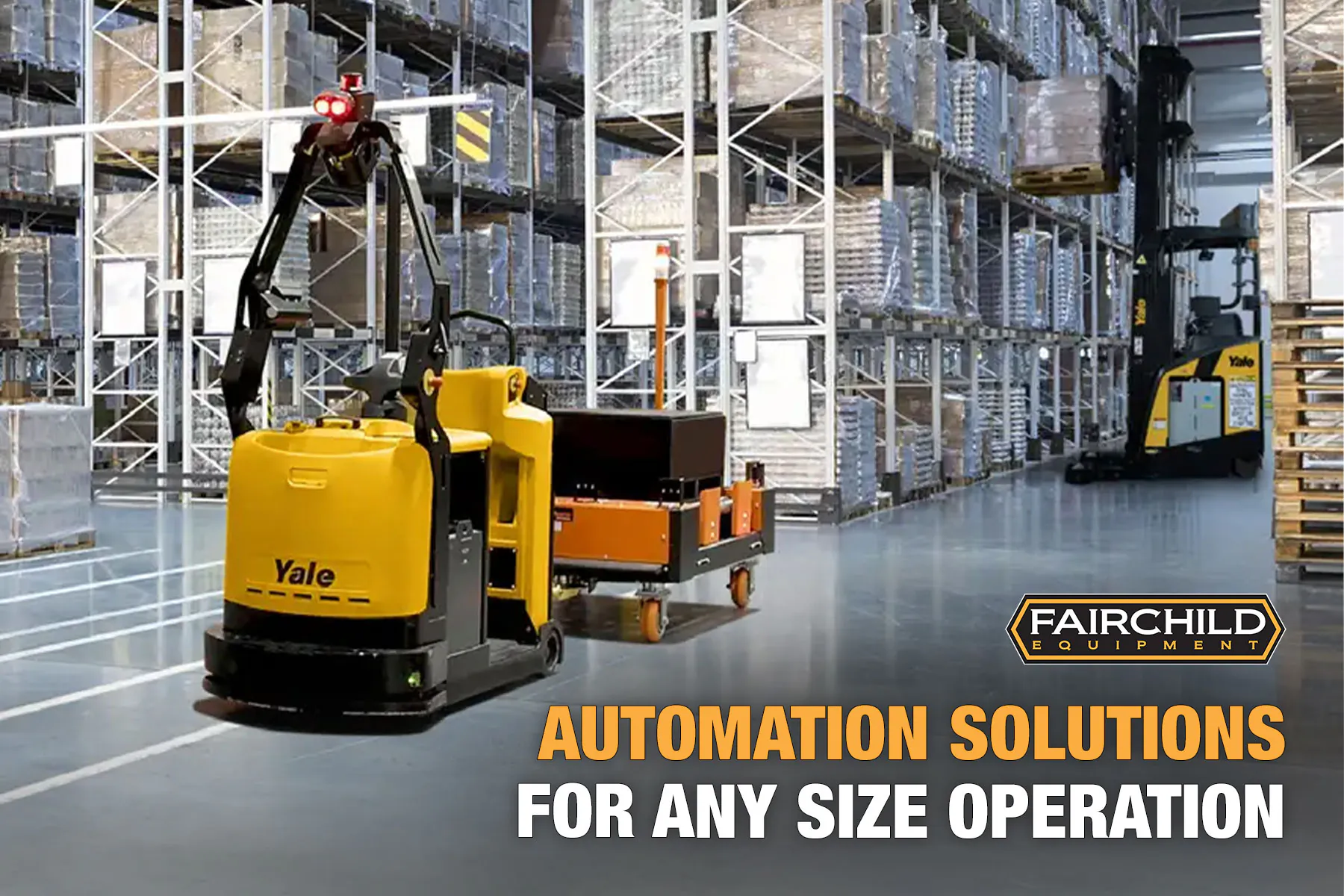
Today, there are plenty of warehouse automation solutions for any size operation, most of which provide strong financial value so long as they’re selected against tangible business needs. The trick is knowing how to balance your entry point into automation against a defensible return on investment, both of which we’ll help you with below.
Choosing a Path to Warehouse Automation by Priority and Scale
Perhaps the best way to think about warehouse automation is to picture several different categories along a spectrum that vary in scale and complexity. On one end of the spectrum, you have small software deployments that are low in cost and very targeted in their capabilities. On the other end, you have warehouse-wide physical installations that embody the pinnacle of automation performance (at a price and timeline that match).
For your business, you can choose to enter the automation world at any point along the spectrum that fits your warehouse size, budget, and priorities. You can even mix a few options together over multiple projects. But before we get ahead of ourselves, here are the main categories of warehouse automation solutions:
- Digital Automation for Workflow Optimization – many warehouses start with automation by simply adopting software packages that help them perform their current work better. These tools cut down on manual decision making and spot ways to improve workflows, freeing up staff to focus on higher-value work. Examples include tools for automatic labor scheduling, storage position planning, forklift charging sequencing, and pick route planning.
- Digital Automation for Managerial Optimization – next, warehouses can adopt more sophisticated software tools that directly support management and control of the operation. Tools like Warehouse Management Systems (WMS), forklift telematics, and inventory management packages use real-time data acquisition and communication interfaces to optimize work as it’s happening. In addition, these systems analyze their collected data to spot performance issues and opportunities that managers can action.
- Physical Automation for Individual Tasks – here, warehouses seek to automate physical tasks so that they can offset human labor without changing the overall workflow. For the most part, task automation takes the form of single pieces of equipment such as case erectors, labelers, simple conveyors, cobots, and mobile pack stations. Personnel-assistance options like mobile scanning devices are great too. Individual task solutions are generally chosen to reduce a specific pain point like ergonomics and bottlenecks.
- Physical Automation for Full Processes – next up, warehouses can deploy automated equipment for specific processes. Examples include complete robotic palletizing, Autonomous Guided Vehicles (AGVs), full box and case lines, and vertical storage carousels. For these types of projects, companies look to solve wide-scale operational constraints such as labor shortages, slow throughput, high error rates, and inconsistent pick accuracy.
- Physical Automation for Entire Operations – last but not least, warehouses can pursue full-scale automation to solve challenges at the level of their entire operation. Full-scale automation most often takes the form of Automated Storage and Retrieval Systems (AS/RS), fleet conversion to Autonomous Mobile Robots (AMRs), and fully integrated material handling systems. Automation at this scale is typically selected for three main reasons: ultimate throughput, maximum storage density, and extreme volume.
As you digest the above paths into automation, remember these three things: automation is not restricted by warehouse size or scale, is fully customizable, and can be rolled out in multiple phases over time.
Rethinking ROI for Small-Scale Warehouse Automation.
Now that we see the many routes into automation, what about costs? From the front end of a project looking to justify a warehouse automation system initiative, this question is really intended to ask about the project’s potential return on investment (ROI). In this context, ROI for automation projects is unique, especially for small-scale warehouses.
Traditional ROI calculations focus on direct, easily measurable cost savings and earnings to offset the project’s initial investment. For smaller-scale warehouses, automation investments should instead be viewed as creating technology foundations that business growth and expansion can be built upon over time. Of course, such projects do provide some immediate payback in terms of savings, but offer greater financial value when you consider future potential.
Here are four principles to keep in mind when establishing the ROI of a small warehouse automation project:
- Entry Costs Can be Relatively High but Justifiable – automated warehouse solutions are rarely “cheap”, regardless of how vendors market their products. Even small software packages usually come with high subscription and setup costs. Large projects are best justified by per-unit cost savings, whereas small projects are best justified by selecting the minimum-viable entry path that solves a specific business challenge (like high forklift fuel costs or high turnover on the pack line).
- Automation Offers Both Direct and Indirect Benefits – always remember that automation will provide value to the business in both direct and indirect ways which can collectively pencil out an ROI. For smaller projects, indirect benefits are your greatest source of value that usually get overlooked – improved team morale, longer employee retention, faster staff training, higher equipment utilization, less time lost to rework and end-of-shift cleanup, to name a few.
- Technology Payback is Often Through Enablement – warehouse automation is a process, one that is just as much about enabling future value as it is about garnering current value. Small warehouse automation system projects often require installation of key infrastructure that was previously lacking, which has a sunk cost component that is hard to recoup in immediate savings. However, if you frame such investments as cost-avoidance or pre-spends for future projects, you can point to heightened ROI down the road.
- Automation Value is Compounding in Nature – lastly, think of warehouse automation as a compounding investment that once started, makes future projects easier, relatively more affordable, and objectively more productive. For example, a small cobot project followed by case packing automation and a WMS may collectively open up huge potential for expanding warehouse density and throughput. In this way, automation ROI can be found in organizational metrics like risk management and sales volume capacity.
Using these principles, you’ll be able to better justify automation investments for any scale warehouse, especially smaller operations. When combined with the multiple avenues into automation that we listed above, getting started with warehouse automation is a very approachable matter of balancing scope and payback to your organization’s needs.
We hope that this discussion has been helpful for your commercial material handling and operational needs. Fairchild Equipment is the Upper Midwest’s premier Material Handling Equipment and Service resource, with headquarters in Green Bay, Wisconsin, and numerous locations ready 24/7 to serve your needs throughout Wisconsin, Minnesota, North Dakota, Michigan’s Upper Peninsula and Northern Illinois. For more information or to discuss which equipment solution might be best for you, please call us at (844) 432-4724 or send us a message.